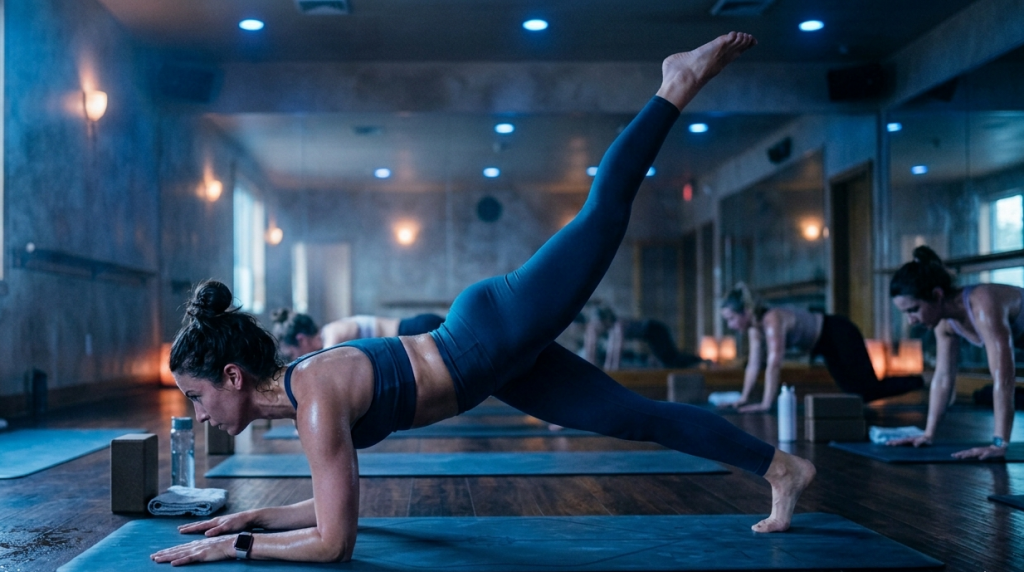
Pilates offers a wide range of physical and mental health benefits, focusing on core strength, flexibility, and body awareness.
Core Strength and Stability
- Develops a Strong Core: Pilates targets the deep abdominal muscles, including the transversus abdominis, which supports the spine and improves overall stability.
- Improves Posture: By strengthening the muscles that align the spine, it helps correct imbalances and encourages a taller, more confident stance.
- Back Pain Relief: A stronger core can significantly reduce the strain on the lower back, often alleviating chronic pain and preventing future injuries.
Physical Conditioning
- Increases Flexibility: Exercises emphasize lengthening muscles and improving the range of motion in the joints.
- Full-Body Toning: Unlike some workouts that isolate specific muscles, Pilates focuses on moving the body as an integrated whole, leading to lean, balanced muscle development.
- Enhanced Balance: The focus on alignment and core control improves coordination and proprioception (your body’s ability to sense its position in space).
Mental and Internal Health
- Mind-Body Connection: The practice requires intense concentration and controlled breathing, which can help lower stress levels and improve mental focus.
- Increased Energy: By improving circulation and stimulating the spine and muscles, many practitioners feel a boost in energy levels after a session.
- Improved Breath Capacity: Pilates teaches deep, lateral breathing, which enhances lung capacity and can assist with relaxation.
Accessibility and Management
- Low Impact: It is gentle on the joints, making it suitable for people of various ages and fitness levels, including those recovering from certain injuries.
- Professional Structure: For those managing a studio, implementing formal membership agreements can help ensure that clients understand these benefits while establishing clear expectations for their fitness journey.
Leave a Reply